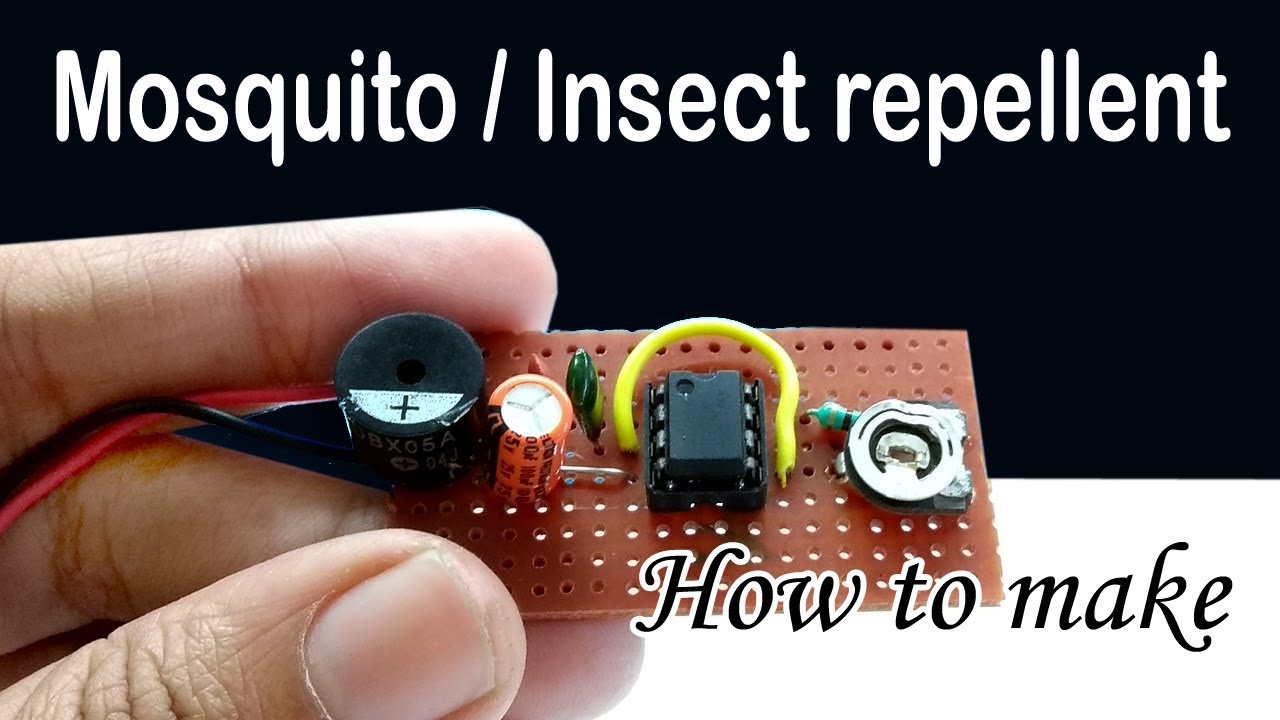
As devices evolve toward compact, high-frequency operation, maintaining waveform stability and interference control has become as critical as delivering power itself. What once applied only to high-frequency communications now affects nearly every systemfrom cars and industrial machinery to smart sensors and computers. The accuracy and stability of a circuit often depend not only on its schematic but also on the physical routing and electromagnetic design of its conductors.
**Signal Integrity** refers to the maintenance of waveform accuracy and timing stability as it travels through wires, harnesses, and interfaces. Ideally, a clean square wave leaves one device and arrives at another unchanged. In reality, resistance, capacitance, inductance, and coupling distort the waveform. Unwanted echoes, noise spikes, or skew appear when wiring is poorly designed or routed near interference sources. As systems move toward higher frequencies and lower voltages, even tiny distortions can cause logic errors or communication loss.
To ensure stable transmission, every conductor must be treated as a controlled transmission line. That means precise impedance control and tight geometry. Twisted conductors and shielded lines are key design practices to achieve this. Twisting two conductors carrying opposite polarities cancels magnetic fields and reduces both emission and pickup. Proper impedance matchingtypically 100 O for Ethernetprevents reflections and distortion.
Connectors represent another vulnerable element. Even minuscule differences in pin spacing can alter impedance. Use proper high-speed connectors, and avoid sharing noisy and sensitive circuits within the same shell unless shielded. Maintain precise contact geometry and cable preparation. In high-speed or synchronized systems, manufacturers often specify cable lengths and routingdetails that directly affect synchronization reliability.
**Electromagnetic Compatibility (EMC)** extends beyond one wireit governs the relationship between circuit and environment. A device must emit minimal interference and resist external fields. In practice, this means applying segregation, shielding, and bonding rules.
The golden rule of EMC is layout isolation and grounding control. Power lines, motors, and relays generate magnetic fields that create interference paths. Always keep them orthogonal to data lines. Multi-layer grounding systems where a single bonding node (star ground) prevent loop current and noise coupling. In complex setups like vehicles or industrial panels, shielded bonding conductors equalize voltage offsets and reduce communication instability.
**Shielding** is the first defense against both emission and interference. A shield reflects and absorbs electromagnetic energy before it reaches conductors. The shield must be grounded correctly: both ends for high-frequency digital buses. Improper grounding turns protection into a noise source. Always prefer full-contact shield terminations instead of single-wire bonds.
**Filtering** complements shielding. RC filters, ferrite beads, and chokes suppress spurious harmonics and EMI. Choose components matched to operating frequencies. Too aggressive a filter causes timing lag, while too weak a one lets noise pass. Filters belong at noise entry or exit points.
Testing for signal integrity and EMC compliance requires combined lab and simulation work. Scopes, analyzers, and reflectometers reveal distortion, emissions, and timing skew. Network analyzers identify reflections. In development, electromagnetic modeling tools helps engineers predict interference before hardware builds.
Installation practices are just as critical as design. Improper trimming or bending can alter transmission geometry. Avoid sharp bends, crushed insulation, or open shields. Proper training ensures field technicians maintain design standards.
In advanced networks like autonomous vehicles or real-time control systems, data reliability is life-critical. A single corrupted byte on a data bus can trigger failure. Thats why standards such as automotive and industrial EMC norms define precise limits for emission and immunity. Meeting them ensures the system remains reliable amid noise.
Ultimately, signal integrity and EMC are about consistency and harmony. When every path and bond behaves as intended, communication becomes stable and repeatable. Achieving this requires balancing electrical, mechanical, and electromagnetic understanding. The wiring harness becomes a precision transmission medium, not just a bundle of wirespreserving clarity in an invisible electromagnetic world.