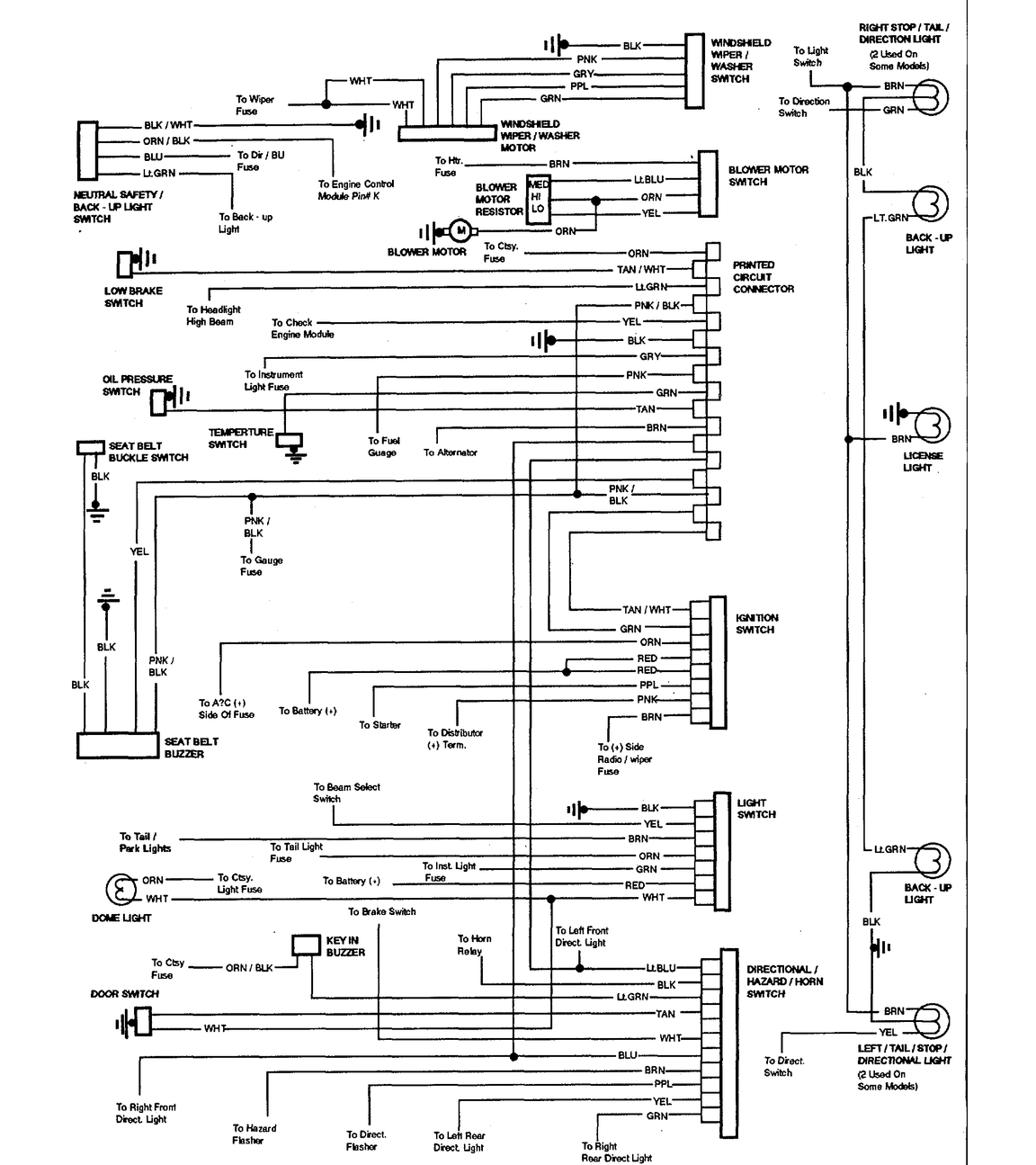
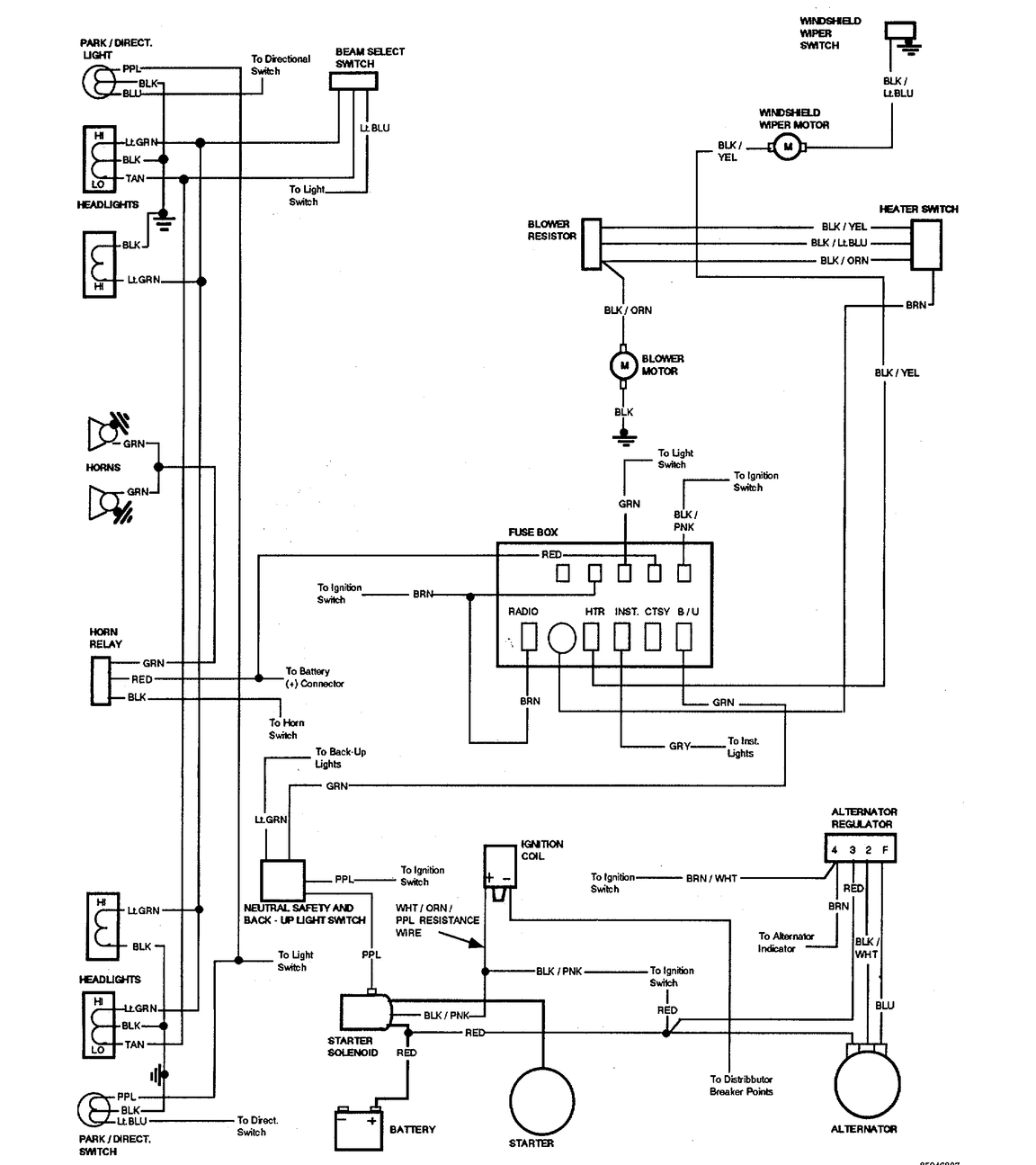
Todays complex electrical architectures have grown far beyond basic mechanical controls. They now include intelligent modules, processors, and networked controllers, all linked via layered wiring systems. Diagnosing faults in such systems requires more than intuition or experienceit demands a logical process supported by accurate tools. Without a systematic approach, troubleshooting quickly turns into guesswork that drains efficiency and reliability.
Diagnostics is the art and science of comparison. It observes how a system performs under design conditions compared to reality. Success begins by defining known-good baselines: voltage, waveform, or logic state. Each data point captured offers clues that, when combined, reveal the exact point of failure.
### **1. Fundamental Tools**
The foundation of every diagnostic process is the universal measuring instrument. It measures voltage, current, and resistance with precision and speed. Whether youre checking power rails, earth paths, or resistor values, the DMM provides instant validation of circuit health. Its beeper and forward-bias tests quickly expose broken links or polarity faults.
The oscilloscope extends measurement into the dynamic realm. It reveals how voltage varies under load, displaying pulses, oscillations, and switching behaviors. For digital control or analog modulation, oscilloscopes visualize distortion, missing pulses, or delay. Multi-channel scopes can compare input and output to assess propagation delay or synchronization.
Hall-effect sensors measure current non-invasively. They use field sensing to detect flow through conductors, ideal for live systems. Modern DC-capable models reveal inrush or leakage current that static tests may miss.
### **2. Advanced Diagnostic Instruments**
When basic tools arent enough, technicians turn to specialized analyzers and testers. digital decoders capture serial communication like CAN, LIN, or UART, translating binary signals into human-readable data. This is vital when controllers exchange information and simple measurements cant explain failures.
Meggers apply high voltage to detect hidden conductive paths. In critical systems, this prevents catastrophic insulation failure.
Cable analyzers locate distance-to-fault in cables. Theyre indispensable for long harnesses, shielded lines, and fiber optics.
At component level, LCR meters measure inductance, capacitance, and resistance. This detects degraded capacitors. infrared imagers visualize heat signatures, instantly exposing hotspots invisible to meters.
### **3. Measurement Strategy**
Tools mean little without method and order. Effective troubleshooting follows a repeatable workflow:
- **Visual Inspection:** Check connectors, insulation, and routing. Over half of faults are found visually.
- **Power & Ground Verification:** Confirm voltage supply and low resistance returns. Voltage drops cause most failures.
- **Signal Analysis:** Compare transitions and duty cycles during real operation.
- **Comparative Testing:** Measure against known-good systems.
- **Functional Simulation:** apply test loads safely to confirm repairs.
Record all observations. Documentation creates traceable knowledge, turning data into predictive maintenance.
### **4. Safety and Calibration**
Accuracy starts with safety. Before testing, check insulation and tips. Calibrate instruments regularly to avoid drifted readings. Always respect safety categories: never use a low-rated meter on high-energy systems. For energized HV systems, use specialized isolation accessories.
### **5. Data Integration and Modern Trends**
Diagnostics is becoming digitally connected. Wireless multimeters and smart oscilloscopes stream live readings to maintenance software. This enables real-time supervision and automated alerts. Robotized diagnostic benches now perform mass verification cycles, ensuring consistency and reproducibility. Combined with AI-assisted analytics, they predict weak points before failures occur.
### **6. The Human Element**
Despite automation, the technicians judgment stays vital. Instruments show numbers, but expertise gives context. Skilled engineers connect physical signs with electrical evidence. They know that a strange voltage or waveform may be a symptom, not the root cause. Effective diagnosis balances logic and intuition.
Ultimately, the goal is not just to measure, but to see patterns. The right tools extend human senses, turning electrical behavior into a readable story. Good diagnostics transforms chaos into claritythe essence of true technical expertise.